.png)
.png)















.png)





































A Complete Guide to Integrated Smart Lighting Systems for Modern Spaces
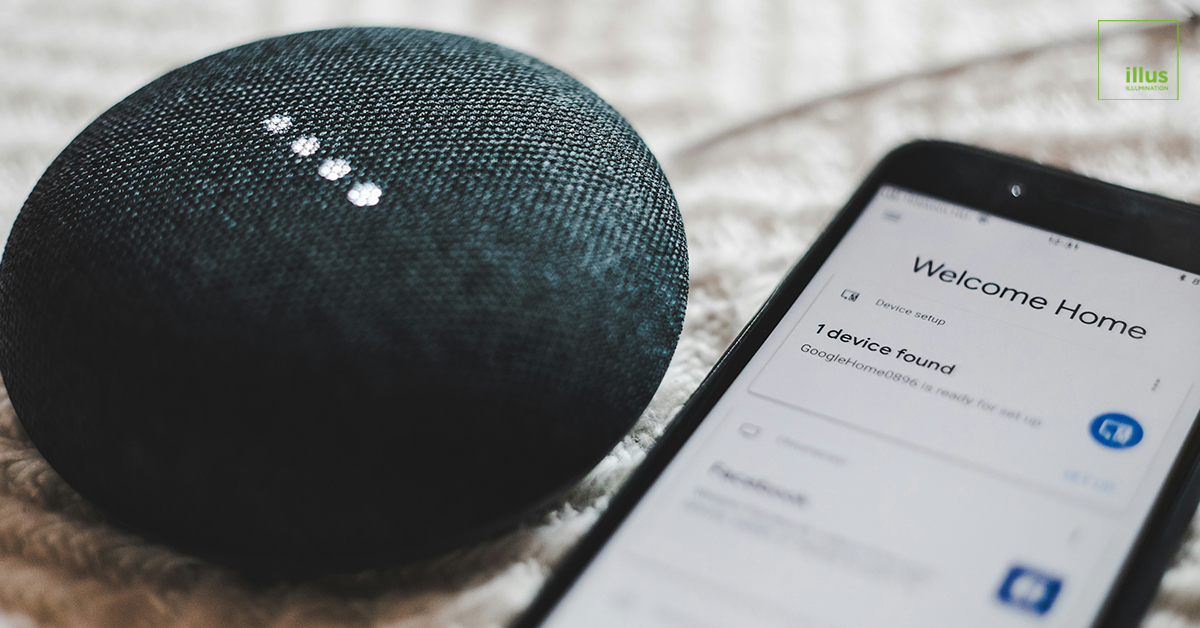
The evolution of the Internet of Things (IoT) has fundamentally transformed the way interior designers, architects, and property developers approach modern spaces. In the past, lighting design was primarily focused on a single objective: illumination. Users relied on traditional switches to control isolated light sources. However, as technology has advanced, lighting design in modern spaces is rapidly shifting from single-source control to comprehensive environmental management.
Today's architectural landscape demands more than just basic functionality. It requires spaces that adapt to the occupants' needs, promote well-being, and optimize energy consumption. This shift has introduced a vital concept in the industry: Integrated Lighting & Smart Solutions. This concept represents a significant direction in the current development of smart homes and commercial buildings. By bridging the gap between professional illumination and intelligent IoT devices, modern environments can become more responsive and cohesive. Whether you are managing a large-scale commercial project or upgrading a residential property, understanding the mechanics and components of these systems is crucial for achieving a truly modern space.
What Are Integrated Smart Lighting Solutions?
When researching options for a project, many consumers and developers encounter a fragmented market. It is common to find standalone smart gadgets—such as a single Wi-Fi-enabled bulb or a basic smart plug—that operate independently. While these gadgets offer a glimpse into home automation, they do not constitute an integrated system.
Integrated Smart Lighting Solutions go far beyond providing isolated smart home appliances. Instead, they focus on the deep combination of a "professional lighting system" with a broader network of intelligent devices. The primary goal of this architecture is to provide a comprehensive, systemic solution rather than a superficial accumulation of fragmented items.
For instance, when sourcing from a reputable smart lighting manufacturer or a professional smart lighting supplier, project managers look for ecosystems that communicate seamlessly. An integrated system ensures that when a user adjusts the lighting for a specific scenario, other environmental factors can respond concurrently. This holistic approach helps facilitate a more intuitive user experience, ensuring that the technology operates silently in the background rather than demanding constant manual intervention. It transforms a building from a static structure into an interactive environment.
Key Components of an IoT Smart Ecosystem
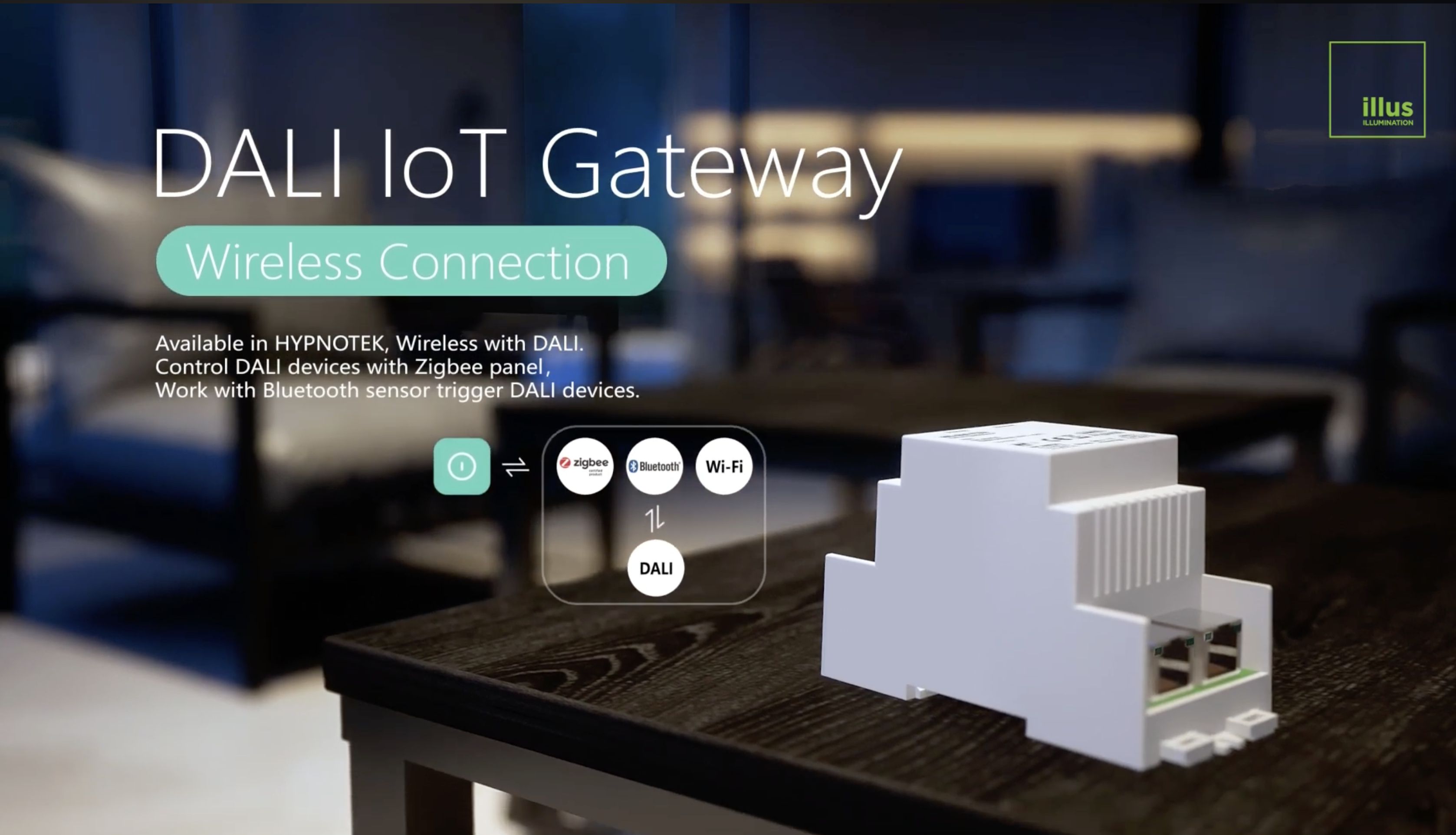
To fully grasp how these integrated systems function, it is essential to examine the core components that make up the IoT infrastructure. A robust system, such as the Hypnotek ecosystem developed under the illus lighting brand, typically categorizes its devices into distinct functional layers.
1. Smart Lighting and Control Terminals
The foundation of any smart illumination system lies in its lighting fixtures and the terminals used to control them. These nodes serve as the primary interaction points for the user.
- Smart Lamp: These are the executing terminals of the system. Smart lamps are designed to offer adjustable brightness and color temperatures, allowing the lighting to adapt to different times of the day or specific tasks.
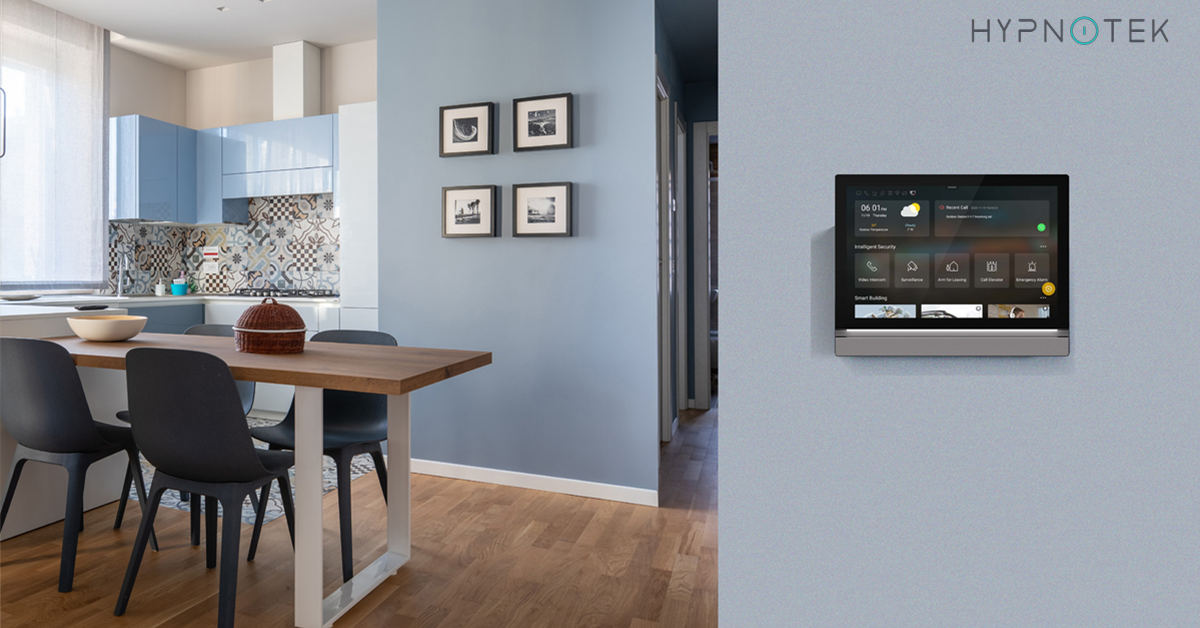
- Smart Panel: Moving away from walls cluttered with multiple traditional switches, the Smart Panel serves as a centralized control node. It acts as a localized brain for a specific room or zone, allowing users to manage complex lighting scenes and environmental settings from a single, sleek interface. For commercial IoT lighting solutions, smart panels are indispensable for maintaining aesthetic consistency.
- Kinetic Switch: This component represents a significant advancement in installation flexibility. The Kinetic Switch provides users with more diverse interaction options. Because it often utilizes the kinetic energy of the press itself, it can reduce or eliminate the need for complex internal wall wiring. This makes it an highly attractive option for both new builds and renovation projects where preserving wall integrity is a priority.
2. Integration of Indoor Environment Appliances
A truly integrated system recognizes that light is only one aspect of a comfortable environment. Air quality and ambient scent play equally critical roles in modern spatial design.
- Air Purifier: By incorporating an Air Purifier into the smart ecosystem, the system extends its reach beyond basic illumination to actively focus on indoor health environments. When linked to the central system, air purification can be triggered automatically based on occupancy or specific daily routines.
- Smart Aroma Diffuser: To further enhance the sensory experience of a room, the Smart Aroma Diffuser can be integrated. This allows the system to synchronize relaxing warm lighting with calming scents, aiming to improve the overall well-being and comfort of the occupants.
3. Security and Shading Devices
To complete the environmental control loop, physical security and natural light management are integrated into the network.
- Smart Curtain: Managing natural light is just as important as controlling artificial light. Smart curtains can be programmed to open or close in tandem with the smart lamps, optimizing energy usage and maintaining privacy.
- Smart Door Lock & Smart Camera: Integrating access control and monitoring devices like the Smart Door Lock and Smart Camera ensures that security protocols can trigger specific lighting scenes. For example, unlocking the door can automatically activate the entryway smart panels and illuminate the corridor.
|
Component Category |
Key Devices |
Primary Function in the Ecosystem |
|
Control Terminals |
Smart Panel, Kinetic Switch |
Acts as the user interface and central command node for specific zones. |
|
Illumination |
Smart Lamp |
Executes lighting commands (dimming, color temperature adjustments). |
|
Environmental Health |
Air Purifier, Smart Aroma Diffuser |
Manages indoor air quality and sensory atmosphere for enhanced well-being. |
|
Security & Shading |
Smart Door Lock, Smart Curtain, Camera |
Controls natural light ingress and integrates physical security with lighting scenes. |
The Role of Unified Control Platforms
One of the most significant challenges in the early days of smart home technology was "app fatigue." As users added devices from different manufacturers, they found themselves forced to navigate a confusing array of separate mobile applications. Controlling the lights required one app, managing the air purifier required a second, and checking the security camera required a third. This fragmented approach often negated the convenience that smart technology was supposed to provide.
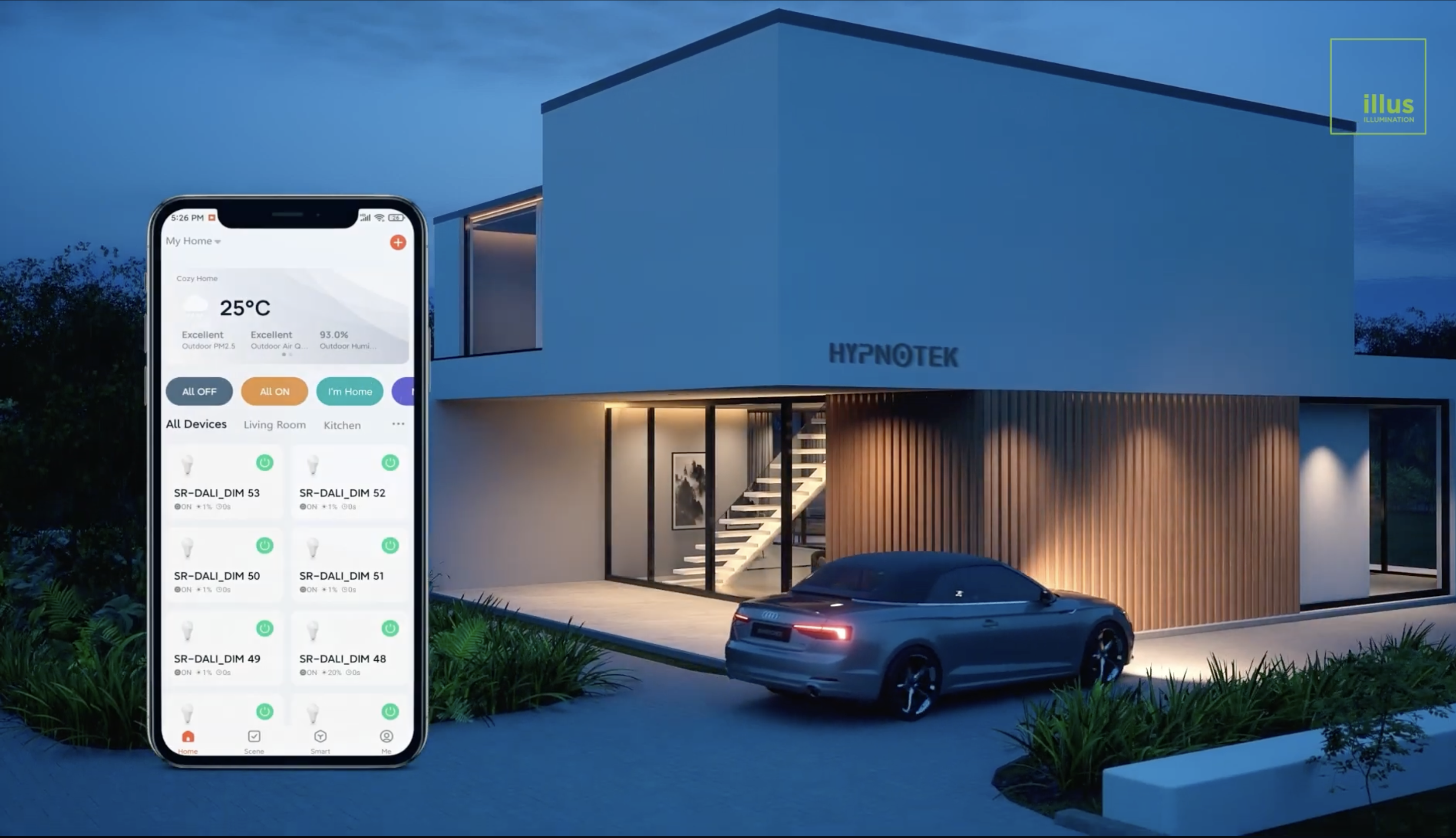
This challenge highlights the critical role of unified control platforms. The core characteristic of an advanced IoT solution, such as the Hypnotek system, is "unified control." By utilizing a centralized software architecture, these systems aim to simplify the user's daily operation process.
The guiding philosophy here is: "One app solves everything." This concept means that users do not need to download numerous applications for different devices. Instead, through a single, unified application, they can address all their control needs. This unified platform allows for the centralized management of all connected smart home devices, facilitating a convenient, whole-house smart interconnection. Whether adjusting the kinetic switch settings in the living room or checking the smart camera at the front door, the unified app provides a seamless and efficient user experience. For wholesale smart home devices buyers and system integrators, offering a solution with a single, reliable app is often a decisive factor in procurement.
Conclusion
An integrated smart lighting system is more than just a modern upgrade—it is the foundation of intelligent spatial design and efficient environment management. Through the seamless collaboration of Smart Panels, zero-wiring Kinetic Switches, and unified environmental appliances, users gain effortless control, superior energy performance, and a truly connected experience.
As the demand for IoT smart homes and modern architectural ecosystems continues to accelerate, selecting the right technology—and the right manufacturer—will define the success of any space. For comprehensive, "One app solves everything" smart solutions, the Hypnotek by illus Lighting delivers the innovation, stability, and aesthetic excellence that global developers and designers rely on.
Get in touch with our team today at global@illuslighting.com to discuss your smart lighting project, and let us tailor the perfect IoT ecosystem for your needs!
Frequently Asked Questions
Q1: How does an integrated smart lighting system differ from regular smart bulbs?
A: Regular smart bulbs are typically standalone devices controlled by their own specific app. An integrated smart lighting system, on the other hand, is a holistic network where professional lighting fixtures, smart panels, and environmental appliances (like air purifiers) communicate through a unified platform, allowing for complex scene synchronization.
Q2: What is a Kinetic Switch, and why is it beneficial for modern spaces?
A: A Kinetic Switch is an innovative control terminal that provides diverse interaction options. It generally requires no batteries or complex electrical wiring, as it generates its own signal power from the kinetic energy of being pressed. This makes installation highly flexible and preserves the architectural integrity of walls.
Q3: Can environmental appliances really be controlled alongside lighting?
A: Yes. The concept of Integrated Lighting & Smart Solutions specifically includes devices like the Air Purifier and Smart Aroma Diffuser. By using a unified control platform, these devices can be synchronized with lighting scenes to manage the overall indoor health environment simultaneously.
Q4: Why do project developers prefer systems with "unified control"?
A: Managing a property with multiple fragmented systems is inefficient and leads to a poor user experience. A system that operates on the "One app solves everything" principle simplifies daily operations, reduces maintenance complexities, and provides a much higher standard of living or working environment, which is highly valued by B2B smart lighting solutions seekers.