











































































Architecture After Dark — How Outdoor Lighting Reveals the Character of a Building
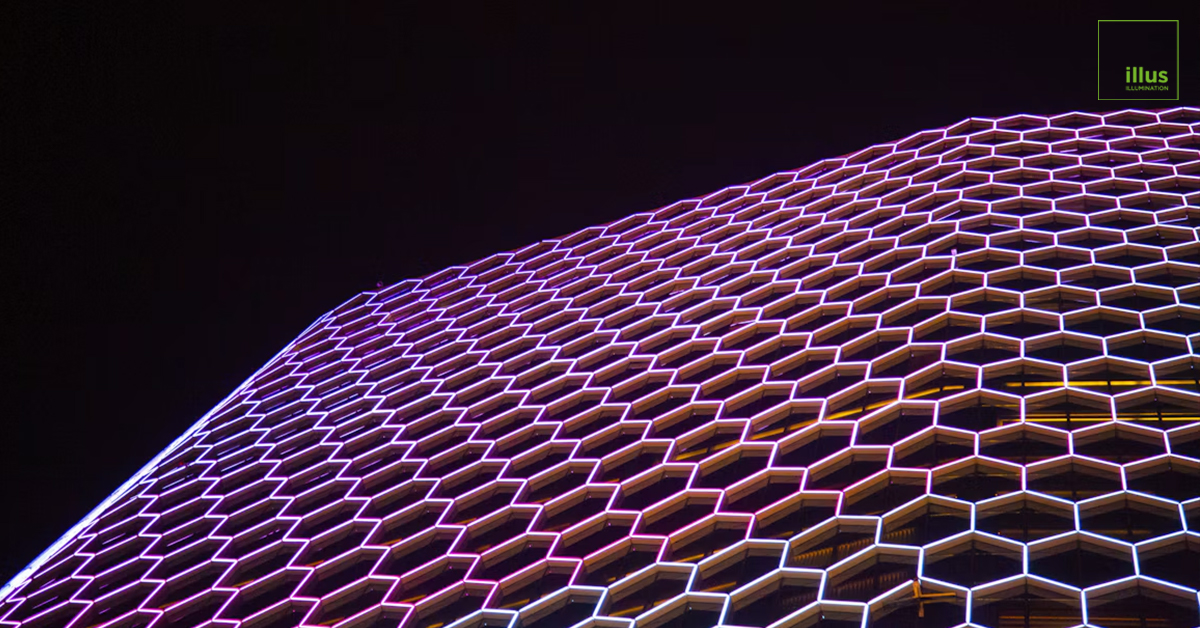
A building tells a different story after sunset.
As natural light fades, carefully designed outdoor lighting brings architectural details, landscape features, and surrounding spaces into focus. Walls gain depth, trees become visual landmarks, and pathways create a welcoming sense of direction.
Today, outdoor lighting is no longer simply about illuminating roads or building facades. It is about revealing architectural identity, creating visual hierarchy, improving comfort, and using energy more responsibly.
For residential developments, hotels, commercial buildings, and landscape projects, a well-planned outdoor lighting scheme can transform an ordinary exterior into an inviting nighttime environment.
Architectural Facades: Highlighting Form and Identity
The building facade is often the first element people notice at night. Effective facade lighting should emphasize architectural features rather than illuminate every surface uniformly.
LED wall luminaires can create subtle illumination across exterior walls, highlighting textures, structural lines, entrances, and distinctive architectural details. Depending on the building's design, lighting can be directed upward, downward, or across selected surfaces to create different visual effects.
For hotels and commercial developments, a carefully illuminated facade strengthens nighttime recognition and helps establish a distinctive visual identity. For residential projects, softer lighting can bring out material textures while maintaining a comfortable and welcoming atmosphere.
The key is to let light complement the architecture, not compete with it.
Landscape Lighting: Bringing Nature into the Night
Architecture does not exist in isolation. Trees, plants, gardens, and outdoor features all contribute to the character of a building.
LED Spike Projector Luminaires offer a flexible solution for highlighting selected landscape elements. Positioned at ground level, they can direct focused beams toward tree canopies, plant structures, sculptures, or architectural details.
By adjusting beam angles, positioning, and light intensity, designers can create contrast between illuminated focal points and darker surrounding areas. This layered approach adds depth to outdoor spaces and makes landscapes visually engaging after dark.
For projects seeking greater energy efficiency and installation flexibility, solar spike lights can also be considered for suitable outdoor applications, particularly where access to electrical infrastructure is limited.
Rather than illuminating every plant, designers should identify a few key features and use light selectively to create a natural visual rhythm.
Pathway Lighting: Guiding Movement with Comfort
Outdoor pathways connect buildings, gardens, entrances, and recreational spaces. Their lighting needs to balance visibility, safety, and visual comfort.
Solar bollard lights and solar wall lights provide practical options for illuminating garden paths, entrances, terraces, and perimeter areas. Their low-level illumination helps define walking routes without overwhelming the surrounding environment.
For hospitality and residential developments, pathway lighting also contributes to the overall experience. A softly illuminated garden path can create a sense of arrival, while well-positioned wall lights make outdoor entrances feel more welcoming.
The goal is not to make every outdoor area equally bright, but to provide sufficient illumination where people need it most.
Less Light, Better Design: Avoiding Over-Illumination
One of the most important principles in contemporary outdoor lighting is knowing when not to use light.
Excessive brightness can flatten architectural details, create glare, disturb the surrounding environment, and increase energy consumption. A more considered approach focuses on lighting only the areas that serve a clear visual or functional purpose.
Several principles can help achieve this balance:
· Prioritize key features: Highlight architectural details, landscape focal points, and essential circulation areas.
· Control glare: Select appropriate beam angles and positioning to prevent direct light from entering people's eyes.
· Create contrast: Allow darker areas to remain part of the composition, giving illuminated elements greater visual impact.
· Choose suitable color temperatures: Match the lighting tone to architectural materials, landscape character, and project requirements.
· Improve energy efficiency: Consider LED technology, solar-powered luminaires, and intelligent lighting controls where appropriate.
Good outdoor lighting is not measured by how much light is installed, but by how effectively it is used.
ILLUS Outdoor Lighting Solutions
At ILLUS, we understand that outdoor lighting must respond to both architectural vision and practical project requirements.
Our outdoor lighting range includes LED Spike Projector Luminaires for landscape accents, LED Wall Luminaires for architectural facades, and Solar Wall, Spike, and Bollard Lights for gardens, pathways, and outdoor living spaces.
By combining different luminaire types, designers and project teams can develop coordinated lighting schemes that enhance architectural character, improve outdoor usability, and support more responsible energy consumption.
Whether for a private villa, a luxury hotel, a commercial development, or a large-scale landscape project, ILLUS provides lighting solutions designed to bring outdoor spaces to life.
Conclusion: Let Architecture Speak Through Light
When thoughtfully planned, outdoor lighting does more than make a building visible after dark. It reveals its form, connects it with the surrounding landscape, and creates an atmosphere that people remember.
The most successful nighttime environments are not necessarily the brightest. They are the ones where every beam of light has a purpose.